Saturday, December 31, 2005
Happy New Year
Hoping that you all received a digital camera for Christmas and your New Year's resolution is to contribute to this blog!

Raving Ravens?
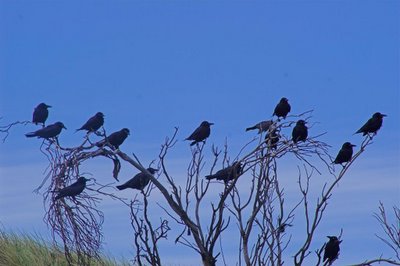
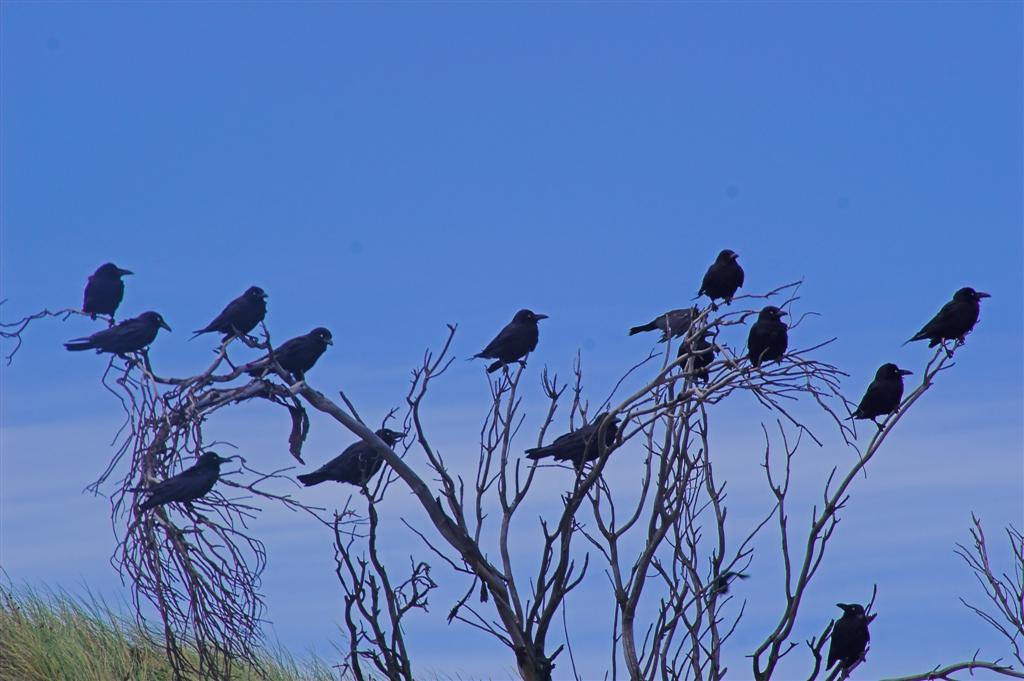
During the last several weeks there has been a flock of over 100 Forest Ravens along the dunes of the South Arm Neck. While I'm used to seeing flocks of ravens during the Winter months, particularly around tips and ploughed paddocks, I can't recall a flock of this size during Summer. They seem to be having a great time cavorting in the updraughts created by the dunes. I did wonder whether this was a speed dating group!
Saturday, December 24, 2005
More from Orielton Lagoon 23/12/05
Bill and I spent the morning at Orielton Lagoon banding Kelp Gull chicks and taking blood samples for DNA studies. Whilst there we also recorded 2 Cape Barren Geese, 55 Golden Plover, 47 Bar-tailed Godwit, 1 Whimbrel, 43 Eastern Curlew and c450 Red-necked Stint. Bill & Els
Tern returns?
Bill and Els saw what they thought was a marsh tern as they drove along Sharkpoint Road (northern side of the Orielton Lagoon), flying up the valley from the direction of the sewage ponds. Investigating further, they found a tern flying back and forth over the pond on the northern side of Brinktop Rd. which they identified as a White-winged (Black) Tern in non breeding plumage. They speculate that it may be the same one seen in November at Barilla Bay.
Friday, December 23, 2005
Marion bay update 22/12/05
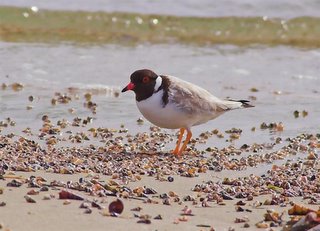
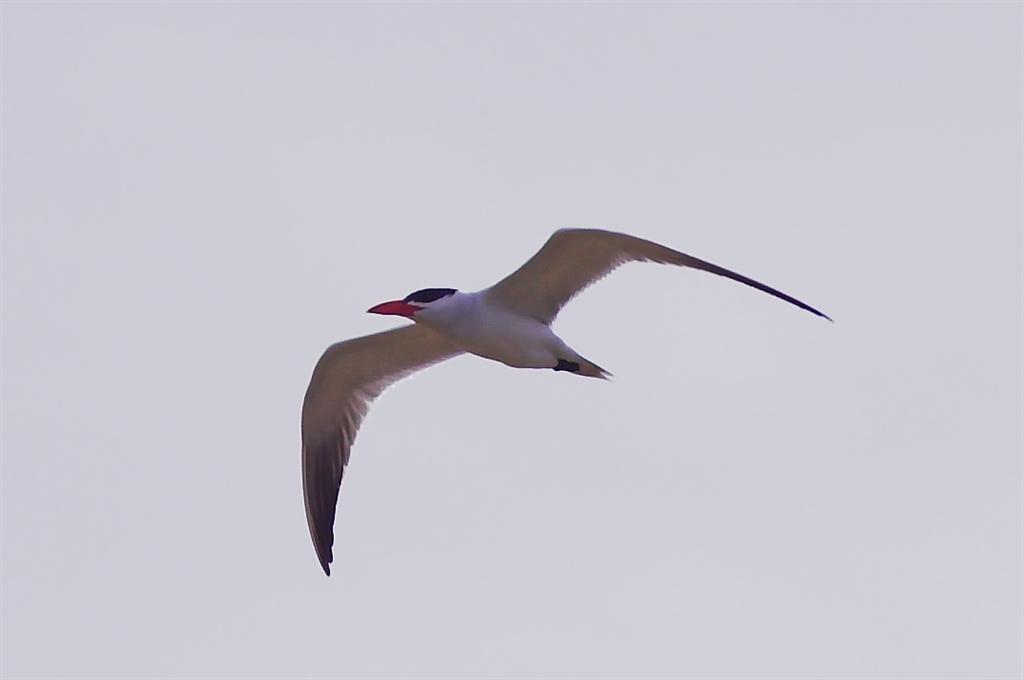
Thought I should have a last look at Marion Bay before the onslaught of the Falls Festival, and I came back with mixed emotions. The huge area at the Southern end of the spit had been completely overtopped by recent very high tides and any attempt by the Fairy Terns to breed there would have ended in failure. In fact I did not see a single small tern. Plenty of Crested and a solitary Caspian. Along the main beach were several pairs of Pied Oystercatchers with young, at least 9 Hooded Plovers with no sign of them breeding at present and a flock of around 400 stint with 2 Turnstones. 2 Bar tails made up the list. Perhaps I should own up to having committed a cardinal sin of birders--I forgot my binos--not easy using a cameras tele lens instead. (Hooded Plover; Caspian Tern)


Orford Fairies
Priscilla Park made a recent trip to the Orford Spit to see how the Fairy Terns were getting on. Apparently an earlier breeding attempt had been washed out, but they were now back. Priscilla also remarked on the magnificent sight of the "fairies" hanging in the howling Sou'wester with a brilliant blue sky as their backdrop. I can only add, "where's your camera?"
Tuesday, December 20, 2005
Swampy
This time of year the harriers are hard at it feeding their young and the accompanying photos were taken today at South Arm Neck. Hunting into a stiff breeze they are probably at their most magnificent. They can be seen around much of the state during most of the warmer months, with a few, mainly juveniles, overwintering.

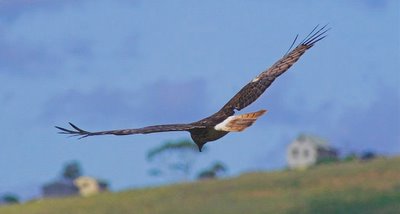
NB The apparent elongated bill on the upper picture is in fact a feather, (click to enlarge photo), the remains of a recent kill.

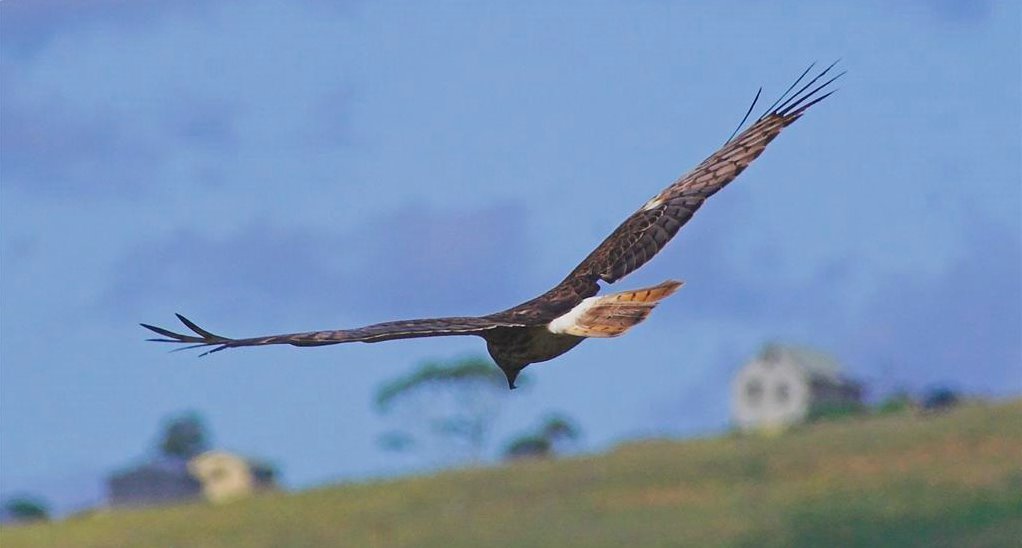
NB The apparent elongated bill on the upper picture is in fact a feather, (click to enlarge photo), the remains of a recent kill.
Monday, December 19, 2005
Good year for Chats?
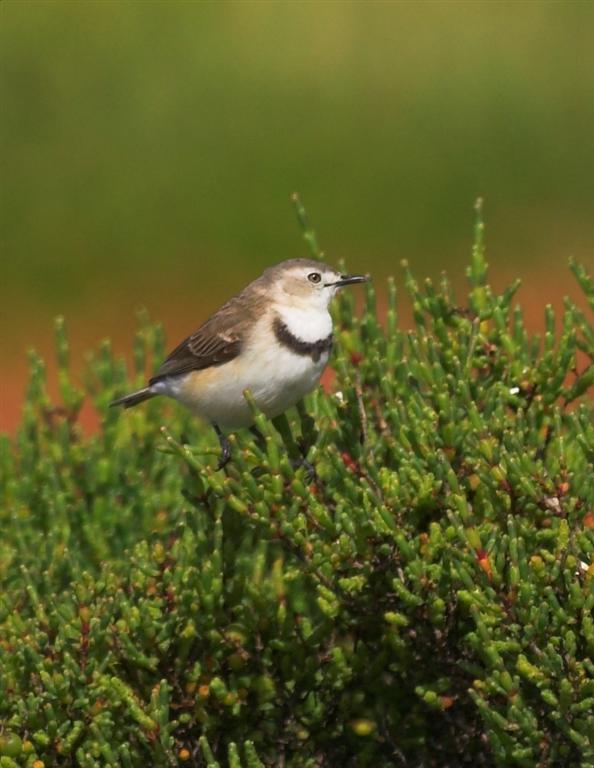
In my recent wanderings through the local coastal marshes, I have noticed the very healthy number of White-fronted Chats about this year. Perhaps the rather wetter Spring has played some part. Is this a state wide phenomena?


"A Bird in the Bush"
Subtitled "A Social History of Birdwatching", written by Stephen Moss, and published by Aurum Press of London, it tells the story through from the early days, largely of the British scene, where it all started, and includes later American involvement. It does dispel my long held and uncharitable view that the reverend gentlemen who seem to have played a major part in its' beginnings, had too much time on their hands! Apparently the countryside in 18th century England was a "no go" area for most people, but the local vicar was off limits to highwaymen, footpads and the like and could wander at will. It goes on to also recount the collectors, taxidermists, oologists, the use of birds feathers in the fashion industry and the more recent improvements in optics, and many other topics. Worth a read.
NB I seem to recall reading that there was a local industry catching birds for the millinery industry. It included, if my memory is correct, catching, by netting, Azure Kingfishers in the creek that runs through Cambridge into Barilla Bay. Perhaps there's someone reading this who can verify that.
NB I seem to recall reading that there was a local industry catching birds for the millinery industry. It included, if my memory is correct, catching, by netting, Azure Kingfishers in the creek that runs through Cambridge into Barilla Bay. Perhaps there's someone reading this who can verify that.
Thursday, December 15, 2005
Orielton Lagoon Update 15/12/05
No sooner than I blog a piece about Orielton than a few more notable birds rear their head. Among the 40+ Curlew and c80 Bar-tailed Godwit are a solitary Whimbrel and the reappearance of the 2 Great Knot. I suspect the best time to find them will be at High Tide at Sorell--appears to be have been around 11am today. The waders are "driven" into Orielton to roost. If you want to see them you WILL need gumboots, and something to wrap them in on returning to your car! Orielton mud is infamous. You will also have to endure the Kelp Gulls, as they have, or are in the course of hatching their young--at a guesstimate there are 50+prs breeding. The Curlew and B/tails normally roost on the waters edge towards the end of the spit that runs out into the lagoon, usually readily seen from the road. A scope would be very useful.
17/12/05 2 Cape Barren Geese have turned up at this site.

17/12/05 2 Cape Barren Geese have turned up at this site.
If you'd only stay still you could be lunch!
Kelp Gull chick with over eager Silver Gull
Kelp Gull chick with over eager Silver Gull
Subscribe to:
Posts (Atom)